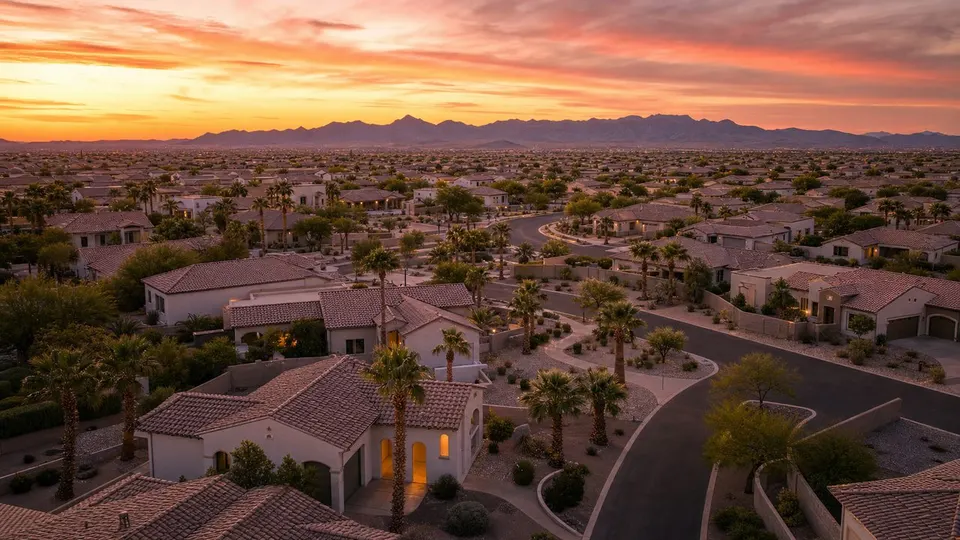
Californians have been moving to Arizona for over a decade, and the West Valley of Phoenix is where most cost-conscious buyers end up. This is a tactical guide from a local agent who closes California-to-Arizona deals — not a cheerleading piece.
Californians have been moving to Arizona for over a decade, and the West Valley of Phoenix is where most of them actually land. It is not Scottsdale, it is not Gilbert, and it is not a marketing pitch — it is a specific cluster of cities northwest of downtown Phoenix where retirees stretch their nest eggs, remote-work families buy square footage they could never afford in California, and second-home buyers pick up golf-course homes for less than a Bay Area down payment. Arizona's overall cost of living runs roughly 15% below California statewide, and the Phoenix metro is 40% to 45% cheaper than comparable San Diego or Orange County lifestyles. This guide is the tactical version — real numbers, real tradeoffs, no cheerleading — from an agent who has walked dozens of California families through this exact move.
The West Valley vs. the rest of Phoenix
If you take one thing from this guide, take this: the Phoenix metro is not one market. It is two. The East Valley — Gilbert, Chandler, Mesa, and the Scottsdale corridor — is where California buyers who don't know the geography usually overshoot. Scottsdale's median sale price is roughly $904,000, and Gilbert sits around $614,995. Those are real numbers, and they get quoted in national relocation articles as if they represent "Phoenix." They don't.
The West Valley — Surprise, Peoria, Buckeye, Goodyear, Glendale, Litchfield Park, and the surrounding master-planned communities — is a completely different pricing tier. As of mid-2026, the West Valley median sits near $449,000, with Peoria running around $528,000, Goodyear around $488,000, Surprise near $450,000, Avondale near $435,000, and Sun City West at roughly $360,000. Master-planned communities like Vistancia in Peoria run higher, with a median near $629,000, and Blackstone (Vistancia's luxury enclave) runs into seven figures. But the point stands: a comparable home in the West Valley costs roughly $150,000 to $400,000 less than the same house on the east side. For a California buyer looking to convert equity into square footage, that gap is the entire story. This is why the West Valley — and Surprise in particular — has quietly become the default landing zone for CA-to-AZ movers over the last five years.
The math: what your California equity buys in the West Valley
The housing math is where the West Valley stops being an abstraction and starts being a life decision. A few real scenarios:
Selling a $900K starter home in Orange County — after paying off a typical mortgage, closing costs, and moving expenses, most families walk with $250,000 to $350,000 in equity. That equity is enough to buy a nearly-new 3-bed, 2-bath, roughly 2,000-square-foot home in Surprise or Buckeye outright with cash left over. No mortgage. See current new-build inventory in Surprise and the active builders in the area.
Selling a $1.4M home in Silicon Valley — after payoff and costs, $600K to $800K in equity gets you West Valley luxury: a golf-course home in Vistancia's Blackstone, a semi-custom in Sterling Grove in Surprise, or a large single-story in Verrado. Explore Sterling Grove listings or Vistancia in Peoria.
Selling a $650K Sacramento home — netting roughly $200K–$275K in equity puts a Central Valley or Sacramento retiree in a mid-range West Valley home outright, with strong options in the 55+ resort communities or a comfortable single-story family home. Look at single-story homes in Surprise or the 55+ communities in Surprise.
Layer in the tax math. Arizona has a flat 2.5% state income tax on all wages — the lowest broad-based flat rate in the country — versus California's top marginal rate of 13.3%. A California household with $250,000 of taxable income saves roughly $19,000 per year in state income tax alone by relocating.
Then property tax. Arizona's statewide average effective property tax rate is approximately 0.62%, so a $500,000 owner-occupied home typically pays around $2,400 to $3,750 per year. For comparison, that same $500,000 home in Illinois runs $10,000+ per year, and in New Jersey often above $12,000. The Prop 13 counter-argument gets raised often here: yes, California's Prop 13 caps your assessed value while you own the property, but the moment you sell, that protection ends. If you're already committed to selling, Prop 13 is not a reason to stay — and the AZ property tax bill is still dramatically lower per dollar of home value even against a freshly reassessed California purchase.
Choosing the right West Valley community based on your California starting point
The West Valley is not one place. It's a menu, and matching the right community to the right buyer profile is where most out-of-state buyers get it wrong. Five archetypes I see repeatedly:
Retiring Boomer from the Bay Area or SoCal. The 55+ resort-community market in the West Valley is the deepest in the country. Sun City Grand, Trilogy at Vistancia, PebbleCreek, Corte Bella, The Grand, Arizona Traditions, and Sun City West all offer resort amenities — golf, pickleball, clubhouses, active-lifestyle programming — at prices that would look like starter-home money in California. Start with Sun City Grand, The Grand in Surprise, or Arizona Traditions, and see the full retirement community overview.
Remote-work family from LA or San Diego. Sterling Grove (Surprise), Vistancia's Village and Blackstone sections (Peoria), Verrado, and the master-planned family communities in North Surprise are the sweet spot — top-rated schools, newer construction, gigabit fiber, and plenty of home-office square footage. Sterling Grove and Vistancia are the two most common landing spots.
Downsizer from anywhere in California. Single-story is the request — no more stairs, no more coastal maintenance. The West Valley is heavily single-story by builder default. See single-story options in Surprise.
Investment or rental buyer. Buckeye and Goodyear are the fastest-appreciating submarkets in the West Valley thanks to new construction volume, TSMC-adjacent job growth, and I-10 access. Newer builds rent well and cash-flow reasonably vs. California cap rates.
Sun-and-golf second-home buyer. PebbleCreek, Corte Bella, Trilogy at Vistancia, and Sun City Grand dominate this category — turnkey golf-course homes, low-maintenance living, and easy Sky Harbor access. Also see Glendale-area buying guide for closer-in options and the best neighborhoods in Surprise for a broader view.
The timing question: sell CA first, or buy AZ first?
Every California-to-Arizona buyer eventually hits the same crossroads. Three honest paths:
1. Sell California first, then rent short-term in Arizona. The cleanest financial path. You know your exact budget, you carry no bridge debt, and you can shop without pressure. The downside is entirely logistical: two moves instead of one, temporary housing costs, and the emotional pain of living out of boxes while you tour. Best for buyers whose California home will sell fast and who value negotiating leverage over convenience.
2. Bridge financing or HELOC against California equity. A HELOC drawn on your California home before you list it lets you buy in Arizona with cash-like terms, then repay the HELOC when the CA sale closes. Maximum flexibility, one move, strong offer position in Arizona — but you're paying HELOC interest during the overlap, and you need to line up the HELOC before listing (lenders won't originate one on a home that's already active on MLS). Many California-to-Arizona-specialized lenders build their business around this exact structure — see californiatoarizonamortgage.com for one lender's playbook and RJH Homes' relocation guide for a walkthrough.
3. Buy Arizona with a new mortgage and carry both temporarily. Works only if your income can qualify for both mortgages simultaneously. Highest carrying cost, lowest execution risk, and you avoid rent entirely. Best for high-earner remote-work buyers with clean W-2 income.
Pick the path before you start touring homes. Buyers who leave the timing question open until they find the house they want almost always end up in Option 3 by default, whether or not it was the smart choice.
What surprises Californians most about buying in Arizona
A partial list of things I end up explaining in nearly every California-to-Arizona transaction:
- HOAs are almost universal in the West Valley new-build market. If you're buying anything built in the last 20 years in Surprise, Peoria, Buckeye, or Goodyear, budget $80–$300/month for HOA dues. Master-planned communities with amenities (Vistancia, Sterling Grove, PebbleCreek, Sun City Grand) run at the higher end.
- Monsoon and summer heat are real. July and August routinely hit 110°F+, and monsoon storms in July–September bring intense wind, dust, and roof-testing rain. Homes here are built for it, but you'll want to inspect roofs, HVAC, and drainage carefully.
- Well water vs. city water matters in outlying areas. Most of Surprise, Peoria, and Goodyear is on city water, but parts of Buckeye and rural North Peoria are still on shared wells or private wells. This affects insurance, financing, and long-term maintenance costs.
- Property tax bills arrive in October and are due in two halves. They're not automatically escrowed with your mortgage in every case — verify with your lender at closing.
- Title and escrow customs differ. Arizona uses title companies rather than attorneys, and closings are typically faster than California's.
- Earnest money conventions differ. Expect 1% earnest money as standard, with a 10-day inspection period. See our Surprise living guide and Surprise cost-of-living breakdown for more day-to-day context.
The Arizona market in 2026: is now the right time?
Honest read: this is the buyer-friendliest Arizona market in three years, and it favors a well-capitalized California buyer. The statewide numbers tell the story. Median days on market has risen to 57 to 65 days, roughly 12 days longer than a year ago. More than 25% of Phoenix-area listings have taken a price cut in 2026. The statewide sale-to-list ratio has slipped to roughly 97%, and the pending-to-active ratio sits near 0.41 — well into buyer's-market territory.
What that means practically: a well-prepared cash or cash-equivalent buyer (i.e., a California seller with equity) can negotiate 3% to 6% off asking on the right property, plus closing-cost concessions, plus rate buydowns from builders on new construction. Builder incentives in Buckeye and North Surprise have been particularly aggressive through 2026. Rate environment context: mortgage rates are still elevated versus 2021 lows, but the pricing softness in Arizona has more than offset the rate impact for cash-heavy buyers. See the current Surprise market snapshot and all Surprise coverage for weekly updates, plus the broader real estate topic index.
Ready to run the numbers for your specific move?
I'm Damon Ryon with Deal Landers Arizona Realty in Surprise. I've walked dozens of California families through this exact transition — from Bay Area retirees downsizing into Sun City Grand to Orange County remote-work families landing in Sterling Grove and Vistancia. Every move is different, but the pattern is the same: get the equity math right, pick the right West Valley community for your life stage, and time the sell-CA-first-vs.-buy-AZ-first question deliberately. Call or text me at 623-295-8169, or use the contact form, and I'll build a shortlist for your specific price range and community fit — no pressure, no cheerleading, just the West Valley math.
Frequently Asked Questions
How much does a house cost in the West Valley of Phoenix compared to California?
The Arizona statewide median sale price sits near $454,000 in mid-2026, and West Valley cities like Surprise, Goodyear, and Buckeye run in the $435,000 to $540,000 range for a comparable single-family home. That is roughly 40% to 45% less than a similar house in coastal Southern California or the Bay Area, where median prices routinely exceed $900,000. In practical terms, a California family selling a $900,000 starter home in Orange County can often pay cash for a nearly-new 3-bed, 2-bath, 2,000 square-foot home in Surprise or Buckeye and still have equity left over.
Do I lose California Prop 13 when I sell?
Yes. Prop 13 caps your assessed value at your original purchase price plus annual increases capped at 2%, but that protection only applies while you own the property. The moment you sell, the buyer gets reassessed at market value, and if you buy a new California home you also start fresh at market value (with narrow age-55 portability rules under Prop 19). So the Prop 13 argument for staying put largely evaporates once you decide to sell — and Arizona's property tax bill on the same home value is dramatically lower per dollar of assessed value regardless.
What is the property tax on a $500K home in Arizona?
A $500,000 owner-occupied home in Arizona typically pays between $2,400 and $3,750 per year in property taxes, depending on the city, school district, and any special taxing districts. That works out to a statewide average effective rate near 0.51% to 0.62%. For comparison, the same $500,000 home in Illinois would pay around $10,000 to $12,000 per year, and in New Jersey often more than $12,500.
How long does it take to establish Arizona residency?
To claim Arizona residency for tax purposes and qualify for the 2.5% flat income tax rate, you generally need to spend more than 183 days per year in Arizona and establish domicile — meaning your primary home, driver's license, voter registration, and vehicle registration are here. Arizona MVD requires a new driver's license within 30 days of establishing residency and vehicle registration within roughly the same window. Most CA-to-AZ movers change all of this within their first month.
Is there a good time of year for Californians to house-hunt in Arizona?
Late summer and early fall (August through October) is often the best window for a California buyer. Days on market are longer, inventory is higher, and sellers who have been sitting since spring are more willing to negotiate. Winter and early spring (December through March) is when part-time and snowbird buyers flood the market, competition rises, and prices firm up. If you can tolerate touring in 105-degree heat, you will see the widest selection and the best negotiating leverage.
Can I close on an Arizona home before I sell my California home?
Yes, and many California buyers do. The three common paths are: (1) sell California first and rent short-term in Arizona while you shop, which is the cleanest math but the most logistically painful; (2) use a HELOC or bridge loan against California equity to fund the AZ purchase and pay it off after the CA sale closes, which offers the most flexibility at the highest cost; or (3) qualify for the Arizona mortgage while still holding the California home and carry both for a short overlap, which only works if your income supports both payments. A local agent and a California-to-Arizona-experienced lender should model all three before you commit.